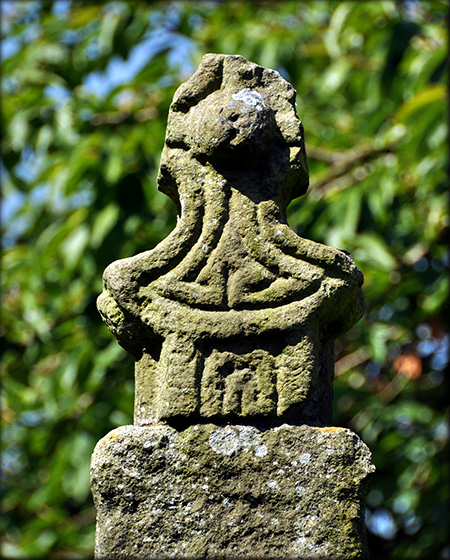
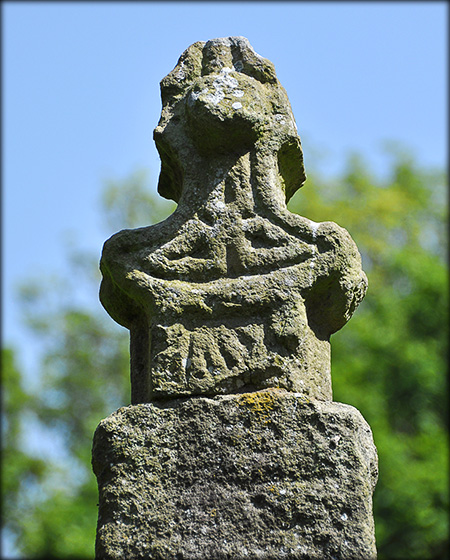
Whalley Crosses 10th/11th Century Anglo-Saxon Crosses After visiting hundreds of similar Christian monuments together throughout Ireland, it was natural for myself and José to visit the Anglo-Saxon crosses at Whalley for our first meet up in England. All three of the sandstone crosses are located on the southside of the church, so for reference purposes I have named them, the West cross, the Central cross and the East cross. The crosses may be classed as Anglo-Saxon , but there is a distinct Norse influence. It has been suggested that the west cross, pictured below, may even include images from Norse mythology. The head pictured below is badly damaged, only the south arm and a central boss remain. When complete it may have looked similar to the Scandinavian influenced cross head at Burnsall. Like the east cross, it's fairly obvious this is not the original head, it may be the head of the east cross or indeed a fourth cross as there are a number of cross fragments built into the south wall of St Mary's Church. The base is set into the ground. The High crosses at Clones and Tuam in Ireland are also composed from two separate crosses. |
|
West Cross, Head east face |
West Cross, Head west face |
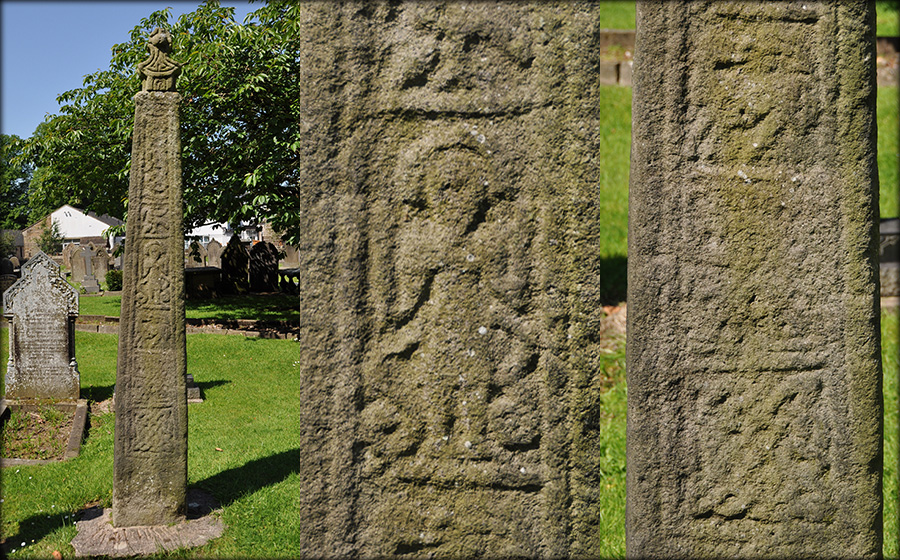
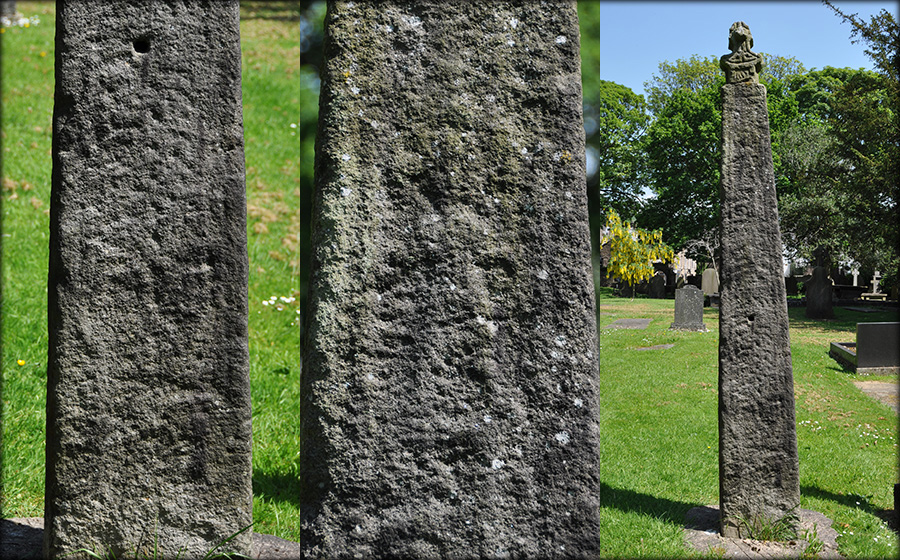
The cross is 2.9 metre tall and decorated on all four sides, the carving on the east face, pictured above, has suffered the least amount of damage from weathering, even then you need good light to see the decoration. It is divided into six panels, the top panel features interlace, the second panel depicts a bird, possibly a pelican. The next panel down bears a carving of a haloed figure with both arms raised in the orans position, below each arm may be a depiction of a serpent. Underneath the figure is a carving of a dog like animal. The lower panels bear interlace. Sadly the west face of the cross, pictured below is too weathered to even hazard a guess what the carving depicted, but it does appear to bear a figure near the top of the shaft, see centre image below. |
|
|
|
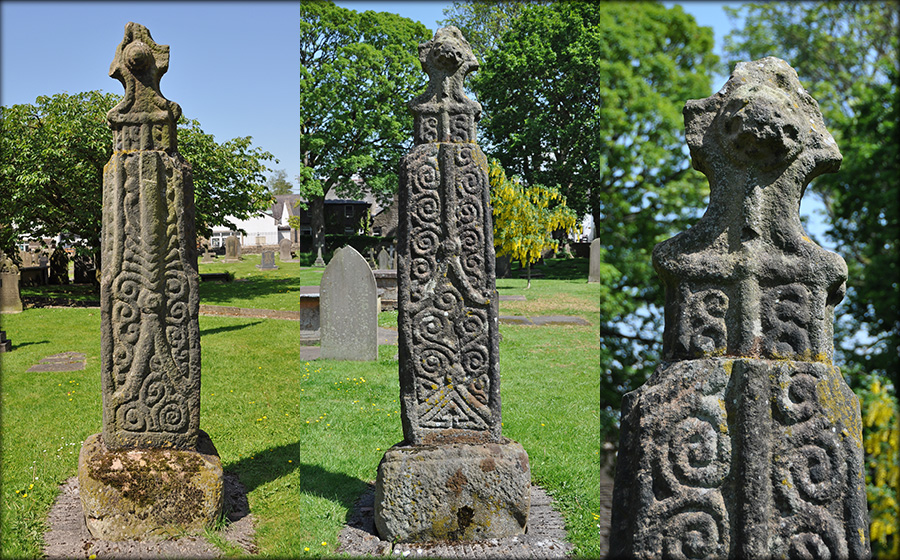
The central cross is in excellent condition, the decoration is quite stunning, I was immediately drawn to it like a magnet. The decoration on all four sides feature foliated scrolls, probably representing the tree of life, I immediately thought of the scroll work on the high crosses at Castledermot in Kildare. The carving on the east face, below left is in extremely high relief and stood out in morning sunlight. I returned later in the day to photograph the west face, below centre. Like the west cross the head, which in this case does go with the shaft, is missing three of the arms, it also bears a central boss. It is clear that part of the shaft is missing at the top, see image right right. The cross is standing in a comparatively small rectangular stone base.
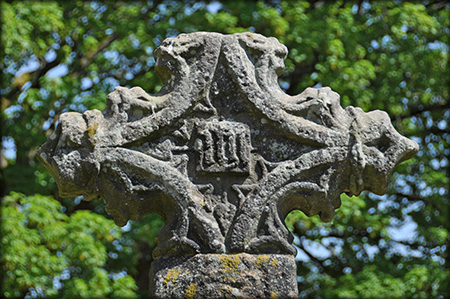
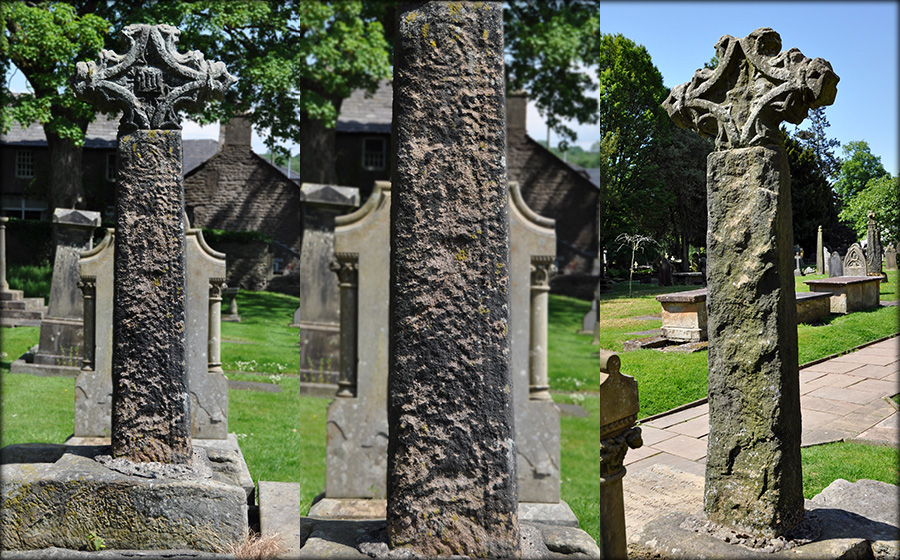
The east cross stands just over 2 metres high and consists of a badly eroded shaft with a 15th century head placed on the top, see the 15th century cross at Devenish Island in County Fermanagh. In good light it is possible to see the outlines of a long panel on the west face, pictured below left and centre, with some interlace in a small panel at the top. The east face, below right is too badly damaged to see any decoration. The letters IHS are carved in small panel in the centre of the head on the west face. The shaft stands in a huge oblong base with extra sockets carved on the north and south sides of the shaft. |
|
 |
|
Situated: In St Mary and All Saints graveyard on the south side of the church, Whalley, Lancshire. SD 73241 36156. West Cross. Last visit May 2026. Longitude: 02° 24' 29" W Latitude: 53° 49' 16" N Photos: Jim Dempsey |
|